
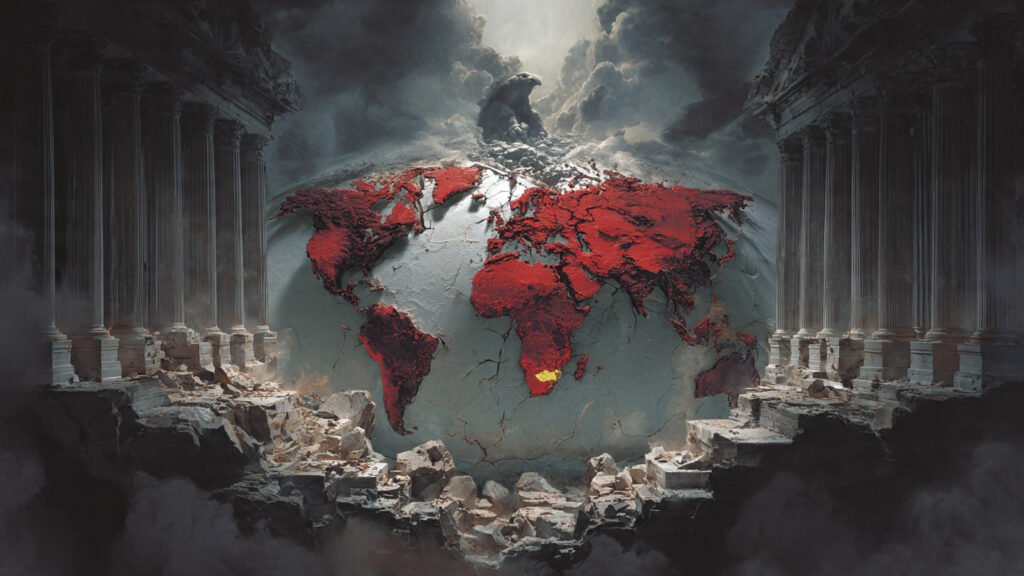
US Intervention in Venezuela and the Erosion of the Post-War International Order
Introduction
The foundations of the international order established after World War II rest upon respect for state sovereignty, collective security, and adherence to international law through institutions like the United Nations. However, global politics appears to be entering a new phase in which powerful states increasingly pursue unilateral actions justified by strategic interests rather than established legal norms. The most dramatic illustration of this trend in the past week has been the United States’ military operation in Venezuela and its aftermath — an episode that has sent shockwaves throughout the world, reshaping geopolitical alignments and intensifying debates over the future of global governance.
US Strikes in Venezuela: What Happened?
In early January 2026, the United States military launched a surprise operation in Venezuela, capturing former President Nicolás Maduro and his wife. The Trump administration framed the intervention as a law enforcement mission tied to narco-trafficking indictments and announced plans to oversee a “safe and orderly transition” of power. Rather than being a narrow anti-drug operation, this act resembled a full-scale intervention into the internal politics of a sovereign state. (The Washington Post)
This move generated not only praise from certain domestic political groups in the United States but also outrage across the global political landscape, with foreign governments and international bodies questioning its legality and broader implications. (AP News)
Global Reaction and the Challenge to International Law
The immediate international response was overwhelmingly critical. Nations across multiple continents — including France, China, Russia, Iran, Mexico, and others — openly condemned the strikes as a violation of the United Nations Charter, which prohibits the use of force against the territorial integrity or political independence of any state except in strictly defined circumstances. (Wikipedia)
Critics argued that the intervention undermines fundamental principles of international law, including respect for sovereignty and the norm against regime change enforced by external powers. By bypassing established diplomatic and legal channels, the United States has set a controversial precedent in global affairs — one that potentially encourages other powerful states to take unilateral actions under the guise of national security. (AP News)
Geopolitical Implications
Beyond legal and normative concerns, the Venezuelan episode highlights deeper shifts in global power dynamics:
- Erosion of Multilateralism: The operation underscores the weakening role of multilateral institutions such as the United Nations and regional organizations that have traditionally mediated international disputes. When major powers act unilaterally, it erodes faith in collective problem-solving mechanisms.
- Realignment of Strategic Alliances: Some states in the Global South view the intervention as an example of a return to Cold War-style geopolitical competition. Countries like China and Russia — long critical of US influence — have used the incident to rally support for alternative frameworks that emphasize sovereignty and non-interference. (Le Monde.fr)
- Domestic Polarization Abroad: Even within the United States, the Venezuela operation has ignited sharp political debate. Supporters praise it as a bold assertion of national strength and resolve against narcotrafficking and authoritarianism. Opponents decry it as imperial overreach and a dangerous drift from constitutional and international constraints. (The Guardian)
What This Means for the Future of World Politics
The global reaction to the Venezuelan operation illustrates a critical moment in the evolution of the international system. Whereas the late 20th and early 21st centuries were dominated by an American-led order grounded in multinational cooperation, the past decade has seen this framework under intense pressure from geopolitical rivalries, resurgent nationalism, and a willingness among major powers to pursue interests outside established norms.
If unilateral interventions like the one in Venezuela become normalized, smaller states may feel compelled to seek powerful patrons, deepen military alliances, or bolster their own defense postures — all of which could heighten international tensions and instability.
Conclusion
The US military intervention in Venezuela this past week represents more than a bilateral conflict; it symbolizes a growing fracture in the global order. At stake is not merely one government’s fate but the future of international law, multilateral institutions, and the norms that have governed interstate relations for decades. In a world where great powers increasingly act in self-defined interests rather than collective agreement, the challenge for policymakers and citizens alike will be to find new ways to maintain global stability, justice, and peace.